
Bee Sting First Aid
What to Do After a Bee Sting | Forest Bees First-Aid Guide
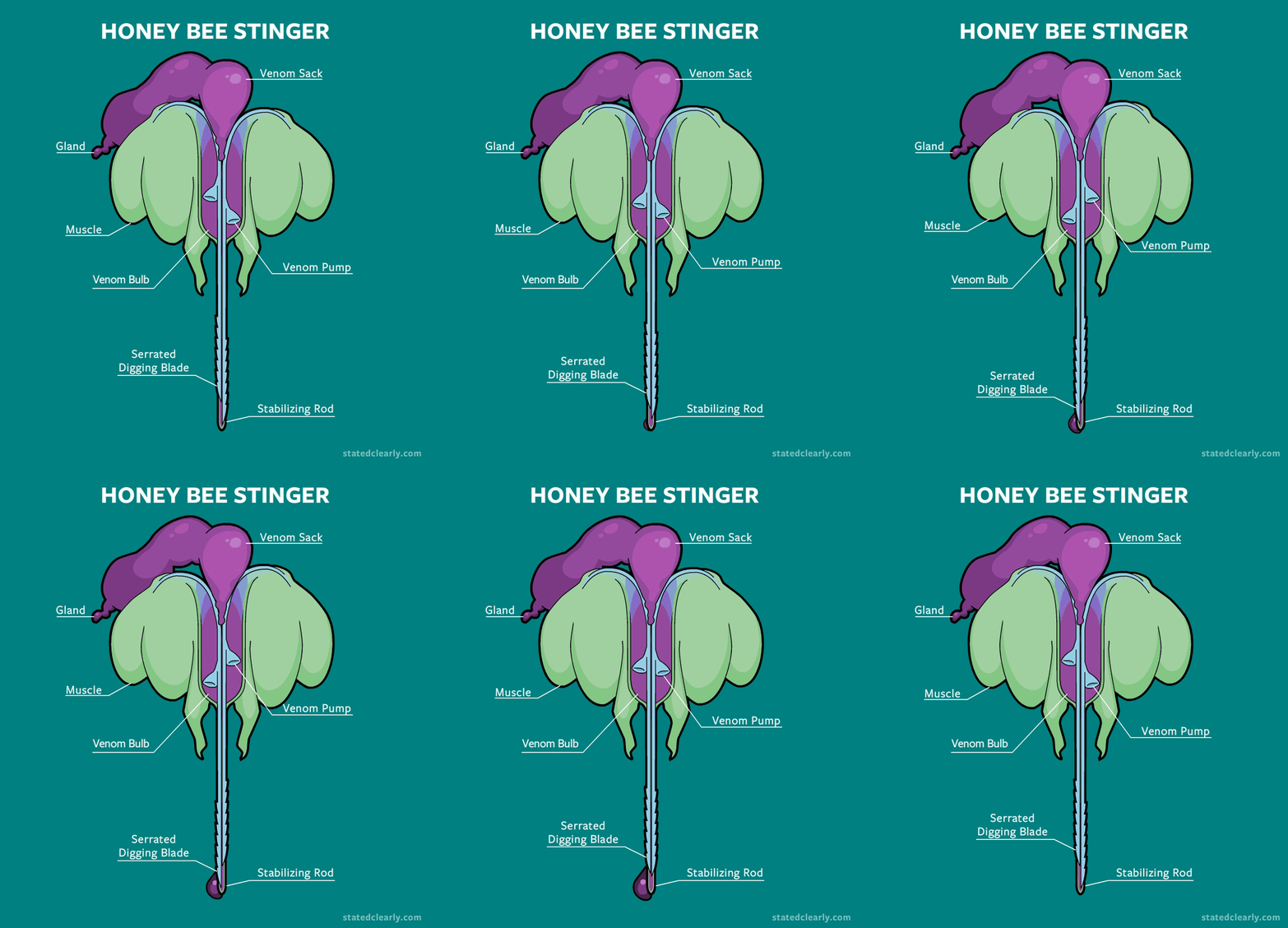
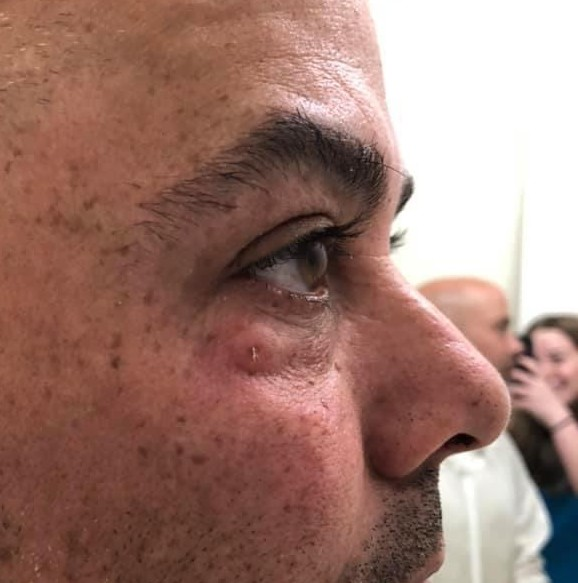
Stung by a honey bee? Here’s exactly what to do: remove the stinger fast, get to safety, use simple at-home first aid, and know when to call 911. A quick, beekeeper-tested guide from Forest Bees.
Forest Bees Step-by-Step Guide to Staying Alive After a Bee Sting
⚠️ For educational purposes only. Always call 911 if you suspect a serious reaction.
Pull the stinger immediately. It’s pumping venom and it is scent beacon.
Even one sting releases an alarm scent that can attract other bees—remove it fast.Don’t panic — get away.
Walk or run calmly to a safe indoor or enclosed area (car, building, etc.). The faster you leave, the fewer stings you’ll take.Take an oral antihistamine.
One dose of Benadryl (diphenhydramine), Zyrtec (cetirizine), or Claritin (loratadine) helps reduce swelling and itching.Neutralize the venom on the skin.
Apply Windex® or an After Bite® ammonia pen, or dab on a baking-soda paste. These help counteract the acidity of bee venom and relieve discomfort.If you feel dizzy, faint, have throat swelling, or any breathing trouble → CALL 911 immediately.
Use an EpiPen if you carry one.If no major symptoms but swelling or hives develop:
These reactions are rarely life-threatening, but drive to a hospital and wait in the parking lot for 20–30 minutes. If symptoms worsen or rebound, you’re already where help is.Remember:
Paramedics, nurses, and doctors are highly trained in managing allergic reactions. Quick medical attention saves lives.Keep a “Sting Kit” in your car:
• Benadryl tablets • Zyrtec or Claritin • After Bite® ammonia pen or small bottle of Windex® • Baking soda packet • Tweezers or scraper • Small bottle of water and wipes

More Reading: Expert Guidance from Dr. Jamie Ellis, American Bee Journal
Excerpted and used with permission from the American Bee Journal, “The Honey Bee Sting,” by Dr. Jamie Ellis, Vol. 156 No. 1. Reprinted on Forest Bees Organics with permission from the American Bee Journal. All rights reserved by ABJ and the author. For educational purposes only. Always call 911 if you suspect a serious reaction.
Dr. Ellis explains that true allergic reactions to bee stings are rare — only 0.5 to 2 percent of people are affected — and that the body’s response can range from mild local swelling to life-threatening anaphylaxis. His research and clinical charts help both beekeepers and the public understand which sting reactions require medical attention and which resolve naturally.
Photo Copyright American Bee Journal. Used by Permission
Source: Dr. Jamie Ellis, “The Honey Bee Sting,” American Bee Journal, Vol. 156 No. 1.
Reaction Type:
Normal Local Reaction - Typical Symptoms: Pain, redness, small swelling at sting site - Recommended Action: Wash area, remove stinger, apply cold compress or ammonia
Reaction Type:
Large Local Reaction - Typical Symptoms: Swelling greater than 10 cm, itching, lasts > 24 hours - Recommended Action: Take an oral antihistamine; monitor for worsening
Reaction Type:
Mild Systemic Reaction - Typical Symptoms: Hives, mild dizziness, nausea - Recommended Action: Seek medical evaluation; monitor closely
Reaction Type:
Severe Systemic / Anaphylaxis - Typical Symptoms: Throat swelling, shortness of breath, collapse - Recommended Action: Use EpiPen® and CALL 911 immediately
Full Article: “The Honey Bee Sting” by Dr. Jamie Ellis
The human body’s reaction to bee stings — Dr. Ellis explains that true allergic reactions to bee stings are rare—only 0.5 to 2 percent of people are affected—and that the body’s response can range from mild local swelling to life-threatening anaphylaxis. His research and clinical charts help both beekeepers and the public understand which sting reactions require medical attention and which resolve naturally.
Defining allergy and variability of responses — “Allergy is a general term that describes a variety of human symptoms and reactions to a diversity of materials including pollen, animal dander, foods, drugs, dust mites (house dust), stinging insects and others. Stinging insect allergy refers to sting-induced systemic reactions of the body that occur at body locations distant from the sting site. Allergic reactions do not include the immediate pain caused by the sting itself or to the burning, redness, itching and swelling that might occur at the sting site. Such reactions include very large local swelling and are referred to as ‘local reactions’.” Dr. Ellis notes that people’s normal and allergic reactions to stings can vary enormously from person to person and even from sting to sting.
Sensitization and why the second sting matters — “An allergic reaction typically occurs after the second or subsequent stinging event by the same or closely related species. The first sting (or stings) induces the production of the allergy-causing antibody, immunoglobulin E (IgE), by the body, resulting in the sensitization of the individual to the venom. Later, when the now hypersensitive individual is stung again, the venom causes an IgE-mediated allergic reaction.”
Categories of reactions —
Normal, non-allergic reactions at the time of the sting — Sharp pain and burning at the sting site that intensifies for minutes, then decreases; redness or swelling; tenderness to the touch. Usually no medical intervention needed.
Normal, non-allergic reactions hours or days after the sting — Itch, redness, swelling for hours–days; small red spot at puncture site (common on fingertips).
Large local reactions — Rapid or massive swelling extending beyond the sting site (e.g., entire arm or leg). Typically not dangerous; see a doctor if mouth or neck are involved.
Cutaneous allergic reactions — Hives, itching, redness remote from sting site (“skin-only allergic”).
Non-life-threatening systemic allergic reactions — Allergic inflammation of nose/eyes, mild respiratory issues, nausea, vomiting, weakness. Seek medical care immediately.
Life-threatening systemic allergic reactions (anaphylaxis) — Affects circulatory/respiratory systems; can be fatal within minutes. Call 911 immediately and use an EpiPen® if available.
Mass envenomation & Africanized behavior — Humans can tolerate roughly 5–10 stings per lb of body weight before venom toxicity becomes life-threatening (≈ 500–1,000 stings for a 100-lb adult). African-derived honey bees are dangerous not because their venom is more toxic, but because far more bees attack at once.
Best-practice first aid — Leave the area quickly, cover head and neck, and get into an enclosed space (vehicle or building). Do not jump into water. Once safe, remove the stinger fast—scrape or pinch, speed matters more than method. Wash with soap and water, apply a cold pack, consider an oral antihistamine, and use a topical sting aid if needed.
Excerpted and used with permission from the American Bee Journal, “The Honey Bee Sting,” by Dr. Jamie Ellis (Vol. 156 No. 1).
Disclaimer: This guide is educational and not a substitute for professional medical advice, diagnosis, or treatment. If you have any concerns after a sting, seek medical care.