2026 NUC AVAILABILITY
Nucs will be available on Saturday, April 18, 2026. You must pre-order. More information below. READ ALL INFORMATION BELOW
Sweet California Bees
Our nucs contain hardy Italian–Carniolan bees that are gentle, productive, and well-suited for California conditions. Bees are not shipped by mail or semi-truck. All bees are transported overnight by us to minimize stress.
Each nuc includes:
• A fertile queen
• A functioning colony
• 5 plastic or wood frames total (3 frames eggs/brood, 1.5 frames stores, 0.5 empty frame)
Delivery Method (Please Read)
Our delivery method provides the best possible conditions for live bees. Bees are pulled from the bee yard at dusk. We depart Sacramento around 7–8 PM and travel overnight, making scheduled drop-offs along the route. Typical route includes I-5 South, crossing to the 101 through San Luis Obispo and Santa Barbara, continuing through Los Angeles, Orange County, Inland Empire, and San Diego County. You will receive text or email ETA updates as we travel south. Pick-up and transport information is below.
Set Pickup Locations & Times
Times listed are typical and may vary.
• 6–7 AM — San Diego (near I-8 / I-15), Dave & Buster’s parking lot
• 5–6 AM — Fallbrook - Park & Ride i15/76. If Park & Ride is full and you dont see a 26’ UHAUL truck, then the location was moved 1000ft North on Hwy 395 at Nessy Burger
• 1–1:30 AM — Magic Mountain (I-5 / Magic Mountain Pkwy)
Nuc Pickup and Installation
Nucs are not the same as packaged bees. They contain brood, build heat quickly, and are meant to be picked up and opened within a couple hours so the bees can begin foraging.
Best option
NEVER stop for errands, meals, or shopping. Your hive setup should already be completely ready before pickup.
During transport
Keep the vehicle cold with the A/C running cold
Keep all nuc ventilation holes fully open and unobstructed
Do not pack nucs tightly against bags, boxes, or other equipment
A screened transport bag is a smart extra precaution
If your bee yard is a long drive away, dress warm. The bees need the cold air.
If you cannot install immediately at the bee yard
You can place the nuc on top of the permanent hive, set the hive lid on top of the nuc, remove the entrance plug, and let the bees orient and forage there until transfer.
If you must use a temporary location
The nuc must be shaded, ventilated, and protected from ants
Put a board or cover over the cardboard nuc so direct sun does not overheat the box
Open the entrance so the bees can forage
The temporary spot must be far enough from your bee yard to prevent drifting
If you use a temporary location, the nuc needs to stay there all day. You must plug it back up in the middle of the night or before first light the next morning. Bees start waking up early.
Before pickup, have this done
Ants will use grass and weeds like a bridge and can damage or destroy a colony.
Bottom line: your nuc needs to be opened the same morning, ideally within a couple hours of pickup, so the bees can start foraging.
Made-to-Order Policy - No refunds
Live Bee Sales — Important Terms & Conditions
Live bees are produced to order and require weeks or months of advance planning, labor, and colony allocation once purchased.
All live bee sales are final. No refunds, cancellations, or replacements are offered once purchase is completed.
All nucs & queens, are live bees. Queens are new but may or may not have a mark. Marks are not following any year code. Because bees are living organisms and conditions change rapidly, delivery or pickup dates may shift due to weather or colony health. We make every reasonable effort to meet listed dates and will communicate clearly if changes are necessary.
Our bees are guaranteed healthy at the time of pickup or delivery and include a fertile queen, eggs, larvae, capped brood, and drawn frames. Once bees leave our care, management, handling, installation, environmental conditions, and exposure risks are beyond our control. For this reason, survival, performance, and long-term success cannot be guaranteed.
Queen acceptance and colony performance depend on many variables, including timing, handling, installation method, weather, and colony condition. These outcomes are not guaranteed, and no refunds or replacements are offered after possession has transferred.
Honey bees are not fully domesticated livestock. They forage freely, travel miles daily, and are exposed to pesticides, pathogens, parasites, and unknown colonies beyond any beekeeper’s control. Even in well-managed operations, annual colony losses of 30–50% are common across North America.
By purchasing live bees, you acknowledge that beekeeping involves unavoidable biological risk and agree that responsibility transfers at pickup or delivery. Colony loss does not indicate unhealthy bees at the time of sale and does not entitle the buyer to a refund.
We follow established industry best practices, including responsible breeding, inspections, queen evaluation, disease and mite management, and clean handling. We have been selling bees for nearly 20 years and will always try to help customers succeed, but we cannot insure against biology, environment, or unknown disease pressures.
Risk of Loss / Customer Responsibility
Responsibility for the nuc or colony transfers to the customer at pickup, or upon delivery to the customer, the customer’s address, or the customer’s agent. We guarantee that nucs and colonies will be delivered alive and in good condition at the time of transfer. After that point, the customer assumes all responsibility for transport, handling, installation, care, survival, and productivity. We do not guarantee future hive performance, lifespan, honey production, or colony survival after pickup or delivery. If a nuc or colony arrives dead or materially damaged, the customer must notify us within 24 hours. If any brood or bees are still alive, the customer agrees to hive and care for the surviving bees as soon as possible.
2026 NUC AVAILABILITY
Nucs will be available on Saturday, April 18, 2026. You must pre-order. More information below. READ ALL INFORMATION BELOW
Sweet California Bees
Our nucs contain hardy Italian–Carniolan bees that are gentle, productive, and well-suited for California conditions. Bees are not shipped by mail or semi-truck. All bees are transported overnight by us to minimize stress.
Each nuc includes:
• A fertile queen
• A functioning colony
• 5 plastic or wood frames total (3 frames eggs/brood, 1.5 frames stores, 0.5 empty frame)
Delivery Method (Please Read)
Our delivery method provides the best possible conditions for live bees. Bees are pulled from the bee yard at dusk. We depart Sacramento around 7–8 PM and travel overnight, making scheduled drop-offs along the route. Typical route includes I-5 South, crossing to the 101 through San Luis Obispo and Santa Barbara, continuing through Los Angeles, Orange County, Inland Empire, and San Diego County. You will receive text or email ETA updates as we travel south. Pick-up and transport information is below.
Set Pickup Locations & Times
Times listed are typical and may vary.
• 6–7 AM — San Diego (near I-8 / I-15), Dave & Buster’s parking lot
• 5–6 AM — Fallbrook - Park & Ride i15/76. If Park & Ride is full and you dont see a 26’ UHAUL truck, then the location was moved 1000ft North on Hwy 395 at Nessy Burger
• 1–1:30 AM — Magic Mountain (I-5 / Magic Mountain Pkwy)
Nuc Pickup and Installation
Nucs are not the same as packaged bees. They contain brood, build heat quickly, and are meant to be picked up and opened within a couple hours so the bees can begin foraging.
Best option
NEVER stop for errands, meals, or shopping. Your hive setup should already be completely ready before pickup.
During transport
Keep the vehicle cold with the A/C running cold
Keep all nuc ventilation holes fully open and unobstructed
Do not pack nucs tightly against bags, boxes, or other equipment
A screened transport bag is a smart extra precaution
If your bee yard is a long drive away, dress warm. The bees need the cold air.
If you cannot install immediately at the bee yard
You can place the nuc on top of the permanent hive, set the hive lid on top of the nuc, remove the entrance plug, and let the bees orient and forage there until transfer.
If you must use a temporary location
The nuc must be shaded, ventilated, and protected from ants
Put a board or cover over the cardboard nuc so direct sun does not overheat the box
Open the entrance so the bees can forage
The temporary spot must be far enough from your bee yard to prevent drifting
If you use a temporary location, the nuc needs to stay there all day. You must plug it back up in the middle of the night or before first light the next morning. Bees start waking up early.
Before pickup, have this done
Ants will use grass and weeds like a bridge and can damage or destroy a colony.
Bottom line: your nuc needs to be opened the same morning, ideally within a couple hours of pickup, so the bees can start foraging.
Made-to-Order Policy - No refunds
Live Bee Sales — Important Terms & Conditions
Live bees are produced to order and require weeks or months of advance planning, labor, and colony allocation once purchased.
All live bee sales are final. No refunds, cancellations, or replacements are offered once purchase is completed.
All nucs & queens, are live bees. Queens are new but may or may not have a mark. Marks are not following any year code. Because bees are living organisms and conditions change rapidly, delivery or pickup dates may shift due to weather or colony health. We make every reasonable effort to meet listed dates and will communicate clearly if changes are necessary.
Our bees are guaranteed healthy at the time of pickup or delivery and include a fertile queen, eggs, larvae, capped brood, and drawn frames. Once bees leave our care, management, handling, installation, environmental conditions, and exposure risks are beyond our control. For this reason, survival, performance, and long-term success cannot be guaranteed.
Queen acceptance and colony performance depend on many variables, including timing, handling, installation method, weather, and colony condition. These outcomes are not guaranteed, and no refunds or replacements are offered after possession has transferred.
Honey bees are not fully domesticated livestock. They forage freely, travel miles daily, and are exposed to pesticides, pathogens, parasites, and unknown colonies beyond any beekeeper’s control. Even in well-managed operations, annual colony losses of 30–50% are common across North America.
By purchasing live bees, you acknowledge that beekeeping involves unavoidable biological risk and agree that responsibility transfers at pickup or delivery. Colony loss does not indicate unhealthy bees at the time of sale and does not entitle the buyer to a refund.
We follow established industry best practices, including responsible breeding, inspections, queen evaluation, disease and mite management, and clean handling. We have been selling bees for nearly 20 years and will always try to help customers succeed, but we cannot insure against biology, environment, or unknown disease pressures.
Risk of Loss / Customer Responsibility
Responsibility for the nuc or colony transfers to the customer at pickup, or upon delivery to the customer, the customer’s address, or the customer’s agent. We guarantee that nucs and colonies will be delivered alive and in good condition at the time of transfer. After that point, the customer assumes all responsibility for transport, handling, installation, care, survival, and productivity. We do not guarantee future hive performance, lifespan, honey production, or colony survival after pickup or delivery. If a nuc or colony arrives dead or materially damaged, the customer must notify us within 24 hours. If any brood or bees are still alive, the customer agrees to hive and care for the surviving bees as soon as possible.

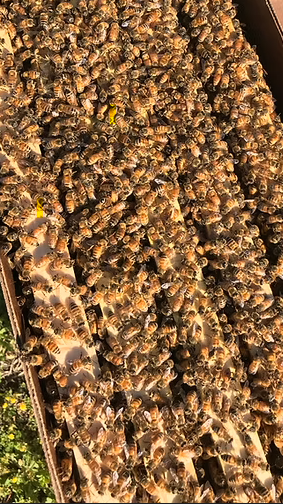 Image 1 of 4
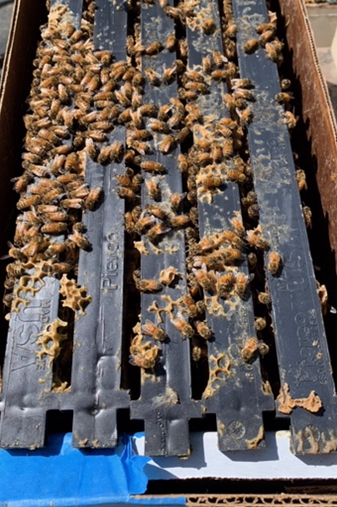 Image 2 of 4
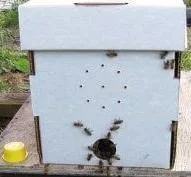 Image 3 of 4
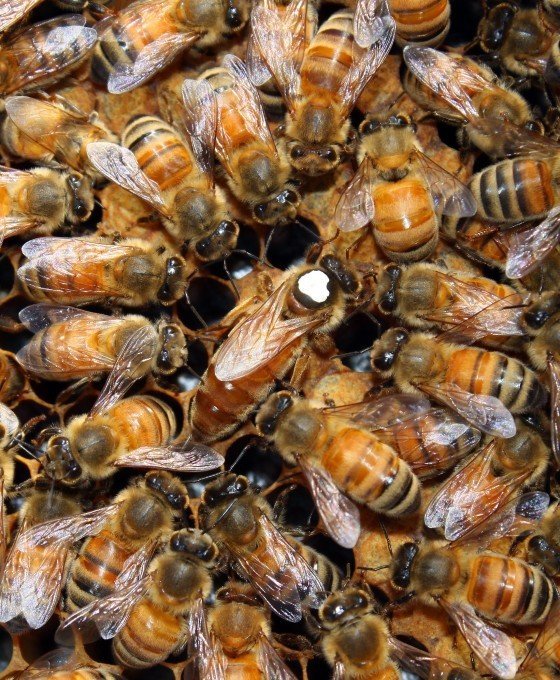 Image 4 of 4